
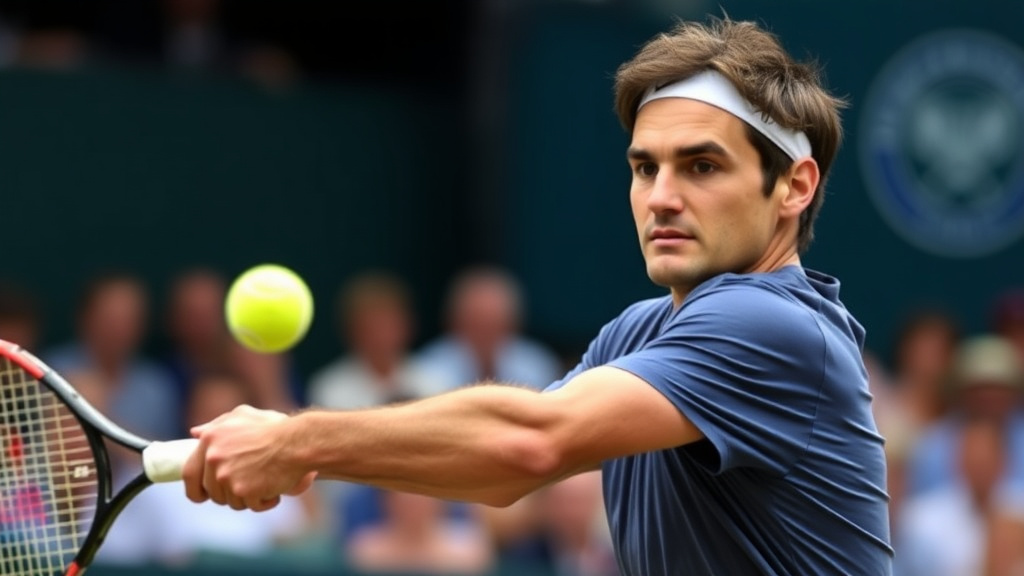
Roger Federer’s serve has long been considered one of tennis’s most dominant weapons, but few grasp how profoundly it reshaped the sport’s competitive dynamics. This article examines the mechanical breakthroughs and competitive intelligence behind Federer’s revolutionary serving technique, analyzing how his method defied conventional wisdom and shaped an whole generation of top-level athletes. From his characteristic grip and motion to his tactical positioning and range, we’ll discover why his serve emerged as the foundation for contemporary tennis mastery and revolutionized how the game is executed today.
The Structure of Federer Serve Innovation
Mechanical Accuracy and Grip Mastery
Roger Federer’s serve advancement originates from his distinctive grip technique, which deviates from standard continental approaches. His semi-western forehand grip on the racket handle offers outstanding range and command, allowing him to produce both strength and rotation at the same time. This biomechanical advantage permitted Federer to perform serves with remarkable precision and diversity. The grip significantly changed how athletes tackled serve mechanics, encouraging coaches internationally to reevaluate conventional training approaches and grip recommendations for up-and-coming athletes.
Motion Smoothness and Movement Chain Optimization
The flow of Federer’s serving motion exemplifies another pillar of his groundbreaking technique. His smooth biomechanical sequence—from feet to shoulders to arm to wrist—generates optimal power transmission throughout the serve. Unlike the jerky, segmented motions of many contemporaries, Federer’s fluid speed buildup delivers tremendous racket head speed with little exertion. This effectiveness lowers injury risk while maximizing performance, showing that refined form often outperforms raw power in elite-level tennis play.
Impact on Professional Tennis Approach
Federer’s transformative serve dramatically changed competitive tennis strategy, forcing opponents to reassess their defensive approaches and baseline tactics. The technical excellence and range he demonstrated set a new standard that elevated aggressive serving patterns across professional circuits. Coaches globally began emphasizing serve development in training programs, recognizing that modern tennis success increasingly depended on offensive serving capabilities. This shift sparked widespread strategic reviews throughout the sport, influencing how players constructed rallies and managed match situations.
Protective Measures by Competitors
Top competitors adapted to Federer’s dominance by developing complex return systems specifically designed to counteract his service superiority. Players spent extensive time perfecting return positioning, predicting serve sequences, and increasing responsiveness. The aggressive return became more widespread as rivals sought to disrupt Federer’s rhythm and reduce his service-game effectiveness. These tactical adaptations marked a direct advancement necessitated by the necessity to counter his remarkable serving skill and sustain competitive relevance.
Modern returners embraced increasingly attacking stances, standing closer to baseline and employing earlier racket preparation techniques. Mental intensity increased as players attempted to disrupt service games more consistently, converting the return game into an attacking tool rather than simply defensive necessity. Federer’s influence inadvertently improved the standard of return play across professional tennis, as competitors continuously enhanced methods to combat his exceptional serving characteristics and maintain parity among players.
Evolution of Service Return Strategies
The serve return evolved dramatically as professionals analyzed and countered Federer’s serving innovations, creating increasingly sophisticated tactical approaches. Players started examining serve patterns meticulously, detecting placement patterns and capitalizing on predictable sequences. Sophisticated data analysis and video technology facilitated detailed serve analysis, allowing competitors to construct personalized return strategies. This data-driven methodology revolutionized return preparation from intuitive practice into analytics-based systems, fundamentally changing how professionals approached one of tennis’s most essential skills.
Current returners increasingly employ diverse tactical placements, including moving further back from the baseline or outside the playing area according to serve tendencies. Forceful return approaches, emphasizing prompt racket positioning and forward movement, evolved into standard professional practice. The psychological dimension intensified as returners sought initial offensive opportunities, changing match patterns from serve-focused play toward more balanced rallies. Federer’s outstanding serve unintentionally expedited return-of-serve evolution, creating higher performance standards that continue influencing professional tennis strategy today.
Historical Impact and Evolution of Tennis Serving
Federer’s Ongoing Effect on The Professional Game
Roger Federer’s revolutionary serve technique has dramatically reshaped how contemporary elite players approach the game. His legacy transcends individual matches; it has transformed instructional frameworks, technical assessment, and competitive methodologies across all levels of competitive tennis. Emerging athletes now examine Federer’s serve mechanics as a model in technical precision and performance, incorporating his principles into their own development. Coaches worldwide have adopted his advanced methodology to grip selection, foot movement, and stroke progression. The ripple effect of his innovations continues to elevate the skill requirements expected from aspiring professionals, establishing new standards for outstanding achievement that characterize contemporary tennis strategy and training systems globally.
Development and Advancement in Upcoming Serve Techniques
The future of tennis serving will certainly build upon the foundations Federer created, as players and coaches remain focused on perfecting and innovating his techniques. Advanced technological developments, such as advanced biomechanical analysis and artificial intelligence, enable more comprehensive analysis of serve mechanics and optimization strategies. Next-generation players are already testing variations of Federer’s approach, integrating his classical elegance with modern athletic science. As tennis develops, his legacy functions as both inspiration and foundation, fostering continuous improvement while respecting the fundamental principles that made his serve revolutionary. The sport’s trajectory suggests that Federer’s influence will remain central to tennis excellence for decades to come.
